
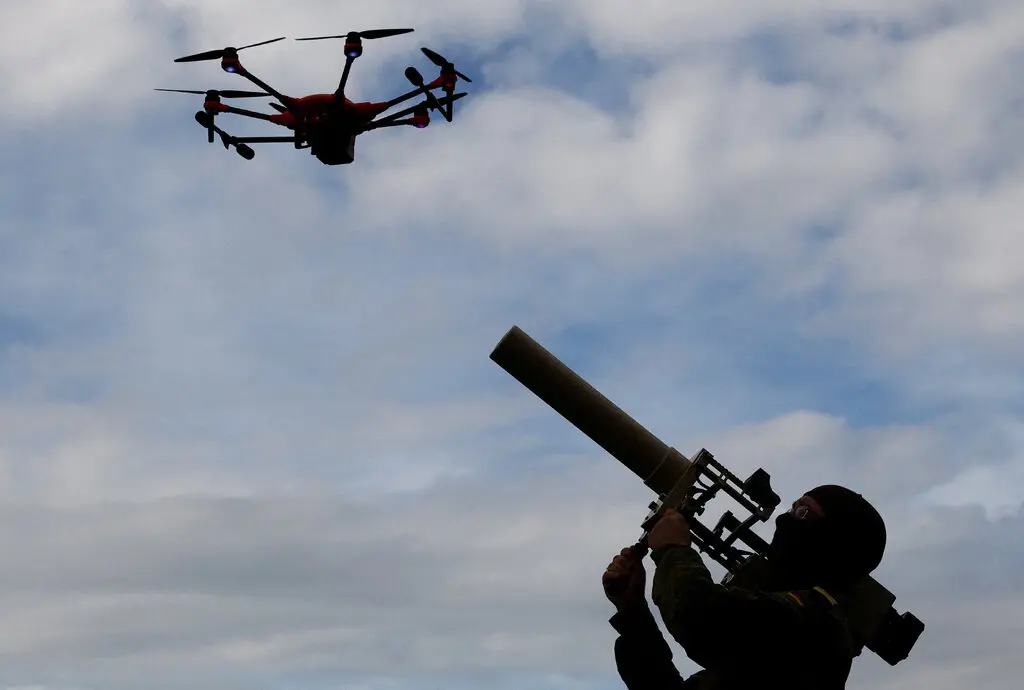
Europe is entering a new era of airspace insecurity. From mysterious drones appearing over airports to long‑range UAVs crossing NATO borders, the continent is facing a rapidly evolving threat landscape. In response, European leaders are advancing an ambitious concept: a multi‑layered “drone wall” designed to detect, track, and neutralize hostile drones before they can disrupt critical infrastructure or violate sovereign airspace.
This initiative reflects a growing recognition that traditional air defenses are no longer sufficient in an age of cheap, fast, and increasingly autonomous drones.
Why Europe Is Building a Drone Wall
Over the past several years, Europe has seen a sharp rise in drone‑related incidents:
Airports in Scandinavia temporarily shut down due to drone sightings
Russian‑operated drones slipping across borders in Poland and the Baltics
Alerts near major German airports
Mysterious drones appearing near critical infrastructure across Belgium, Denmark, Norway, Sweden, Germany, and Lithuania
These incursions have exposed vulnerabilities in Europe’s airspace defenses and highlighted the need for a coordinated, continent‑wide response.
European officials now acknowledge that long‑standing air defense assumptions no longer apply. Drones are cheap, expendable, and difficult to detect — and they can be used for surveillance, disruption, or hybrid warfare.
The Drone Wall Concept
The proposed drone wall is not a physical barrier but a networked defense ecosystem stretching from the Baltic states to the Black Sea. It is envisioned as a multi‑layered system integrating:
Detection
Ground‑based radars
Airborne radars
Acoustic sensors
Optical and infrared systems
AI‑powered threat classification
Neutralization
Jamming and GPS disruption (soft kill)
Missiles, gunfire, and interceptors (hard kill)
Emerging technologies such as directed‑energy weapons
Command & Control
Real‑time data sharing across borders
AI‑assisted decision‑making
Integrated NATO‑EU coordination
The goal is not to create an impenetrable shield — experts agree that’s impossible — but to raise the cost and difficulty of drone incursions while improving Europe’s ability to respond quickly and effectively.
Hybrid Warfare and the Russian Factor
Many of the recent drone incidents are believed to be part of Russia’s broader hybrid warfare strategy. These tactics include:
Anonymous drone flights over airports
Surveillance of military bases
Probing of air defenses
Disruption of civilian infrastructure
Western intelligence officials suspect that some drones are launched locally by proxies or from ships near European coastlines. The Kremlin denies involvement, but the pattern of activity aligns with Russia’s broader efforts to test NATO’s resilience.
This threat environment has accelerated political support for the drone wall, especially among countries closest to Russia, such as Poland, Finland, Estonia, Latvia, and Lithuania.
Challenges Facing the Drone Wall
Despite strong momentum, the drone wall faces several obstacles:
1. Scale and Cost
Protecting thousands of kilometers of airspace requires:
Numerous tactical radars
High‑altitude sensors
Cost‑effective interceptors
24/7 readiness
Even with rising defense budgets, funding remains a major challenge.
2. Rapidly Evolving Drone Technology
Drone development cycles are fast — especially in conflict zones. As one expert noted, aggressors will:
“Observe, adjust, repeat — until they get through.”
This creates a constant arms race between offense and defense.
3. Coordination Across Nations
A functional drone wall requires:
Shared intelligence
Standardized systems
Unified command structures
Political alignment
These are difficult to achieve across multiple EU and NATO members.
4. Timeline Concerns
EU leaders hope to have the system operational by 2027, but analysts warn the timeline is ambitious.
A Necessary but Imperfect Solution
Security experts agree that while the drone wall will not be perfect, it is necessary. Europe’s airspace threats are growing, and traditional defenses cannot keep pace.
The drone wall represents a shift toward:
Proactive detection
Integrated counter‑UAS systems
Rapid response capabilities
Multi‑nation cooperation
It is not a silver bullet — but it is a critical step toward securing Europe’s skies in an era of hybrid warfare and drone proliferation.